Predictive maintenance using IO-Link sensors from ifm
Coca-Cola, the world’s largest beverage manufacturer, operates more than 50 bottling plants in Western Europe alone. To perform maintenance tasks quickly and accurately and to resolve malfunctions, the group is digitizing all its filling systems and developing a “digital twin” for this purpose. This makes it possible to monitor production processes in real time and, if necessary, optimize them immediately—even remotely and from virtually anywhere in the world. Coca-Cola works closely with ifm, an automation specialist, to develop the reliable sensors required in production.
Edelstal in Austria represents one of the flagships in this regard. “We are a licensed bottler for Coca-Cola and fill almost all products here,” explains Christian Kohlhofer, Plant Manager at Coca-Cola HBC Austria. The plant, which fills more than 500 million liters of beverages annually, is one of the largest within the group.
“We are increasingly focusing on automation and digitalization. Many of the things we are implementing now will later be adopted by other plants in the group,” says Christian Kohlhofer.
The Edelstal plant also serves as a backup site: if production is limited at other plants, the Austrian facility can step in and help.
Condition monitoring prevents unplanned downtime
System availability is the highest priority for the international beverage manufacturer. “We record every system failure immediately,” explains the plant manager.
The plant follows “just-in-time” production principles and therefore does not produce for stock. This is why predictive maintenance with condition monitoring is so important. In other words, the technical condition of machines and systems is constantly monitored so that maintenance is performed exactly when it is actually needed. Real-time sensor data allows for the early detection of wear and tear and is highly useful in terms of maintenance requirements. The goal is to prevent unplanned downtime, reduce maintenance costs, and extend the lifespan of the systems. Modern technologies such as IO-Link, IoT (Internet of Things), and machine learning make it possible to plan maintenance so that it occurs at precisely the right moment. In other words, it happens neither too early nor too late.
“The number of installed sensors allows us to significantly increase system availability,” Christian Kohlhofer adds with satisfaction. “Maintenance is no longer driven by a schedule, but by technical condition. This significantly reduces our costs.”
IO-Link sensors monitor complex processes
When it comes to the digitalization of systems, sensors with an IO-Link interface are the number one choice. These intelligent sensors use a standardized bidirectional communication interface to communicate with control units and other systems. Unlike conventional sensors, they allow not only the exchange of simple switching signals but also extensive process data and diagnostic information. Measured values are transmitted digitally rather than analogically; therefore, there is no interference, and data accuracy is ensured because there are no conversion losses, as is the case with analog transmission.

The sensors are easy to install and configure, providing precise real-time data. Acyclically read diagnostic data—such as minimum or maximum values, degree of contamination, or errors (e.g., wire breaks or short circuits)—optimally supports the principle of condition-based maintenance. IO-Link sensors also ensure high flexibility and automation efficiency. Their high level of compatibility allows for seamless integration into existing systems and easy incorporation into IT structures through digital communication.
One example is the use of IO-Link vibration sensors in can sealing. “Quality in can sealing depends on thousandths of a millimeter,” explains Gerhard Wieszmüllner, Head of Maintenance and Spare Parts at Coca-Cola HBC Austria. “Predictive IO-Link sensors from ifm allow us to detect even the smallest vibration deviations, thus guaranteeing that the can is completely and permanently sealed.”
IO-Link valve sensors from ifm are used on the butterfly valves of the bottle washing system. “We notice in advance if a valve seal is damaged or needs to be replaced—without any loss of material,” says Gerhard Wieszmüllner. “This means, for example, that we don’t have to drain any alkaline baths. This avoids lengthy machine downtimes. It saves time and money.”
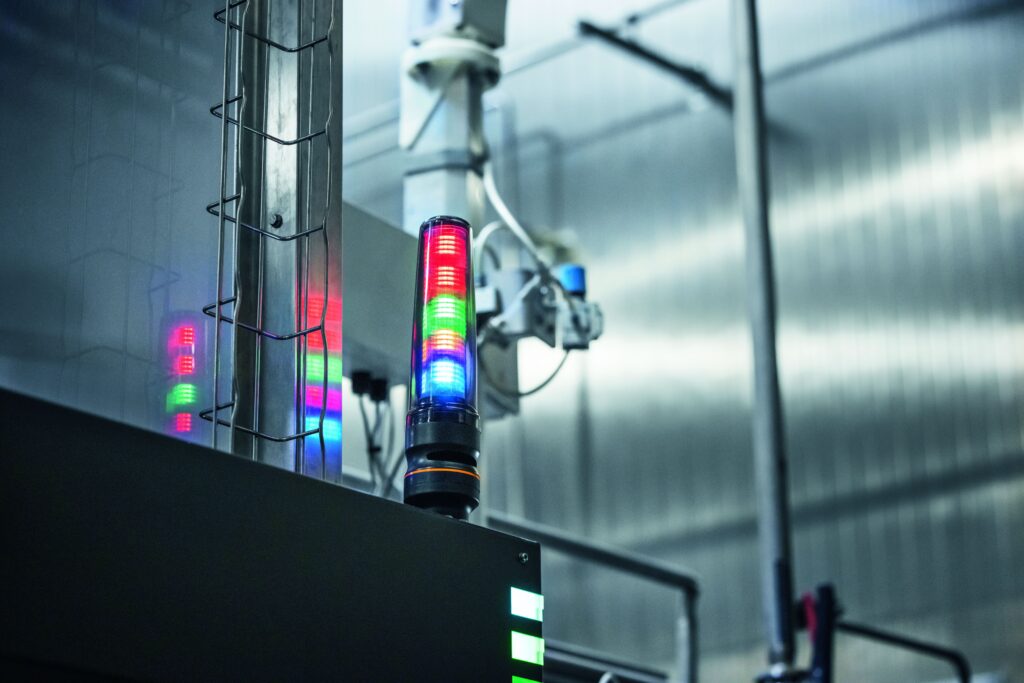
“Predictive IO-Link sensors from ifm allow us to detect even the smallest vibration deviations, thus guaranteeing that the can is completely and permanently sealed.” — Gerhard Wieszmüllner, Head of Maintenance and Spare Parts at Coca-Cola HBC Austria.
Digital Twin using “Y-path” technology
All data from the system’s sensors are recorded to accurately evaluate the technical condition of machines and their components. Y-path technology is used to split sensor data into two paths in real time: the first path transmits data to the PLC (Programmable Logic Controller), which handles the routine control and regulation of the system. Simultaneously, digital sensor data is directed via a second path to the IT level. At Coca-Cola, signals from a range of different sensors are automatically transmitted to the “Pocket Factory” IT platform in this way. This virtual image is essentially a digital twin that precisely reflects the actual system and is continuously updated with real-time data.
Digitalization down to the sensor level provides Coca-Cola with absolute transparency of production on a global scale. The digital twin, based on data from ifm’s IO-Link sensors, allows for system maintenance based on their actual condition. Machine learning and artificial intelligence are used to quickly predict wear states, production errors, and other process anomalies.
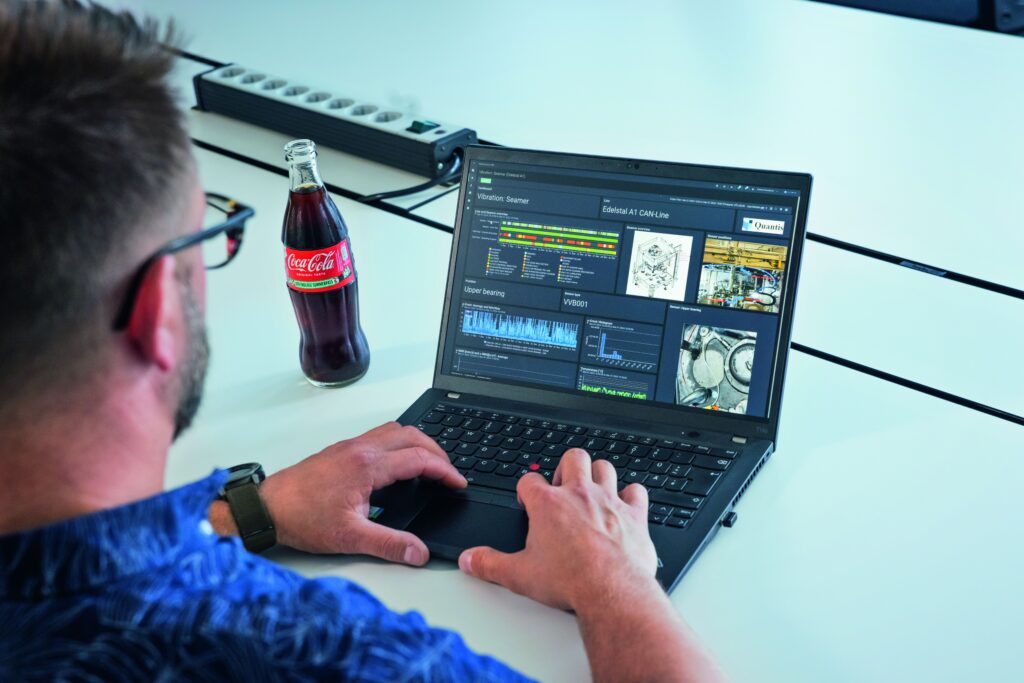
“This data allows us to implement the correct maintenance steps proactively and at the optimal time to ensure product quality,” explains Gerhard Wieszmüllner. This eliminates unplanned downtime, minimizes costs, and simultaneously guarantees high quality standards.
Another important aspect of digitalization at Coca-Cola is sustainability. By using digital technologies, the group is able to reduce its ecological footprint. Precise monitoring and control of production processes, for example, allow for more efficient use of resources such as water and energy. This is not only beneficial for the environment but also helps reduce costs.
Cybersecurity requirements met
Cybersecurity plays a central role in a manufacturing plant like Coca-Cola. It is important not only for protecting sensitive company data but also for safeguarding critical production processes against unauthorized access and manipulation. The growing network connection of machines and systems within Industry 4.0 increases the risk of cyberattacks on infrastructure.
A successful attack could result not only in production outages but also in significant financial damage or loss of reputation. Plants also frequently use systems to process critical production data (for example, for quality assurance or efficiency enhancement). Protecting this data means that company secrets are safeguarded and the safe and stable operation of processes is guaranteed. In a strictly regulated environment such as Coca-Cola’s, all components, including sensors, must meet strict cybersecurity requirements. Only then can safe plant operation and production integrity be ensured.
“In collaboration with our internal cybersecurity team, experts from ifm were able to devise ways to comply with all standards,” says plant manager Christian Kohlhofer appreciatively. “Data is stored, processed, and analyzed in such a way that all cybersecurity principles are followed.”
A close partnership with ifm
Coca-Cola has worked closely with ifm as an automation partner at its Austrian plant for many years. Plant manager Christian Kohlhofer has only words of praise for this partnership: “ifm’s slogan is ‘Close to you.’ And that precisely matches our corporate principle: ‘We over I.’ The cooperation works very well, and both sides strive to find quick solutions,” the plant manager adds. “ifm is always there when you need them and reacts very quickly in case of problems.”
ifm’s slogan is: “Close to you.” And that precisely matches our corporate principle: “The team is more than the individual.” The cooperation works very well, and both sides strive to find quick solutions. ifm is always there when you need them and reacts very quickly in case of problems. — Christian Kohlhofer, Plant Manager at Coca-Cola HBC Austria.
Conclusion
Digitalization and automation at Coca-Cola is a continuous process that is driving the group into the future. By using state-of-the-art technologies and working closely with partners like ifm, Coca-Cola can increase efficiency, optimize its production processes, and ensure product quality. At the same time, digitalization contributes to improving sustainability and reducing environmental impact. A clear focus on innovation and continuous improvement means that the partnership between Coca-Cola and ifm is ideally positioned for successful continuation in the future.
Source: ifm