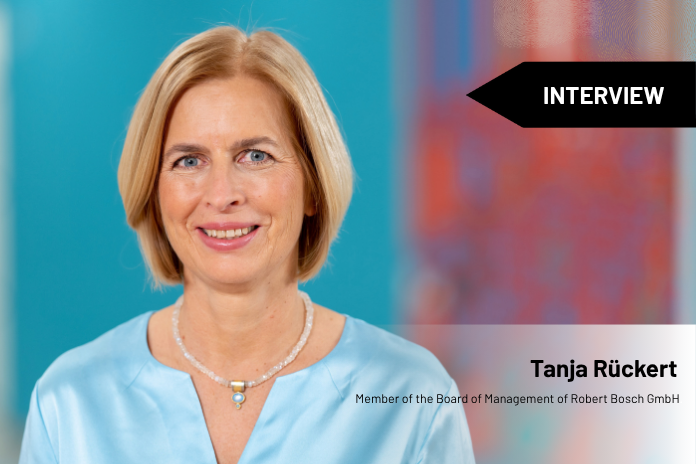
According to her, artificial intelligence is no longer a matter for the distant future in manufacturing. Bosch uses it for quality control, maintenance and working with production data, whilst AI agents and robotics are opening up further possibilities. It is precisely the combination of real-time factory data with in-depth knowledge of production that could be one of the great opportunities for European industry. However, the interview also turned to what humanoid robots still lack, just how sensitive their hands need to be, and why the entire hydrogen value chain will need to be resolved for the energy transition.
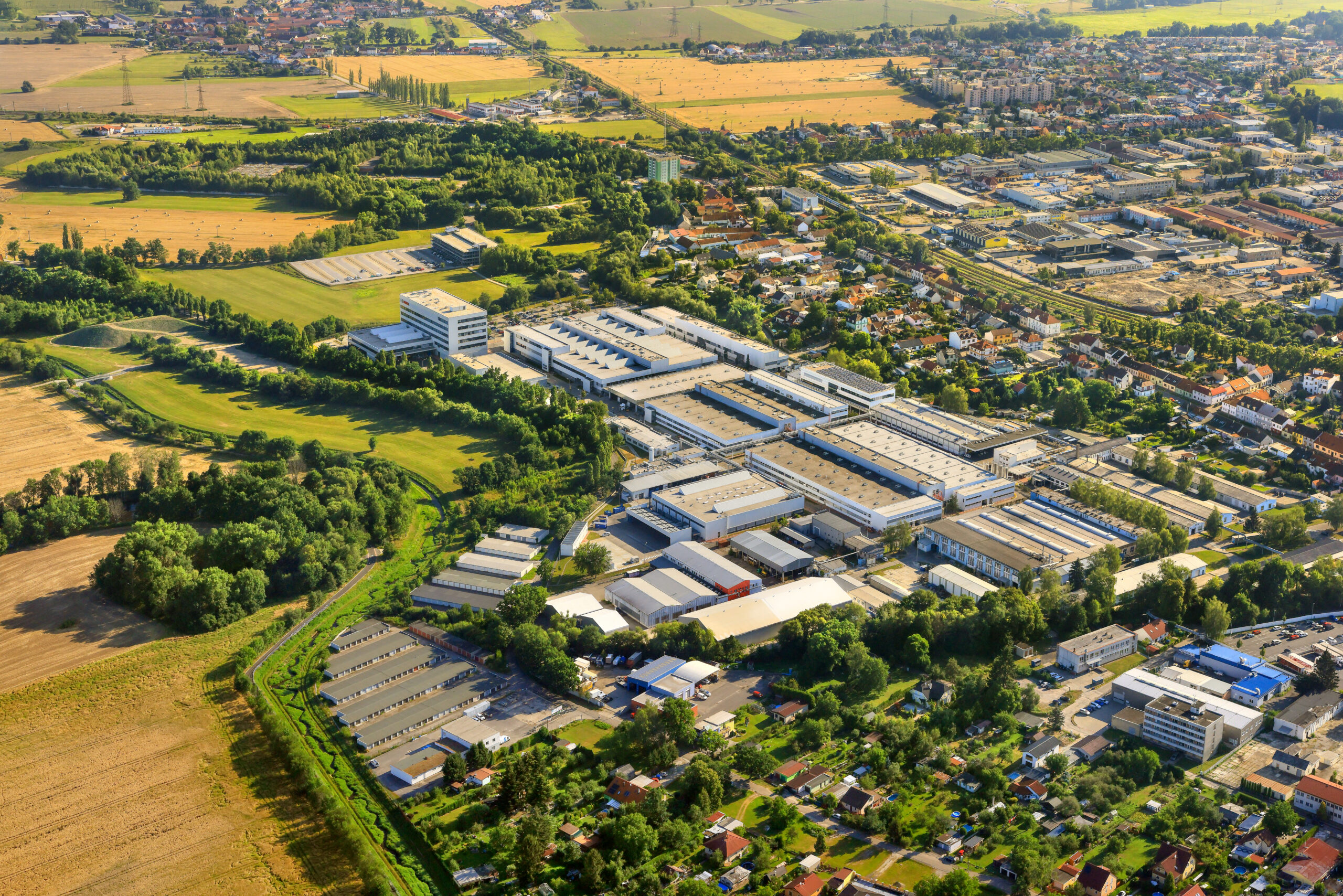
Steffen Hoffmann, Regional President of the Bosch Group for Scandinavia, Central Europe and the United Kingdom, and Milan Šlachta, representative of the Bosch Group in the Czech Republic and Slovakia and Commercial Director of Robert Bosch spol. s r.o. in České Budějovice.
AI IN MANUFACTURING
Tanja Rückert:
Artificial intelligence is an important part of Bosch’s strategy. We use it to improve our products, but also to increase productivity. And in manufacturing, this is certainly no longer limited to one or two isolated cases. A good example is optical inspection. When we first started using AI-powered automated optical inspection, we needed images of defective parts to train the system. However, as our production standards are very high, there simply weren’t enough of them. During the initial roll-out, we had to wait around 18 months before we had gathered a sufficient number of images.
Today, we can use generative AI to create synthetic images of defective parts. Within a few hours, we can have 15,000 or 20,000 of them and get started much sooner. We have already rolled out this optical inspection solution to around 2,000 production lines. So here, we are really talking about real-world production.
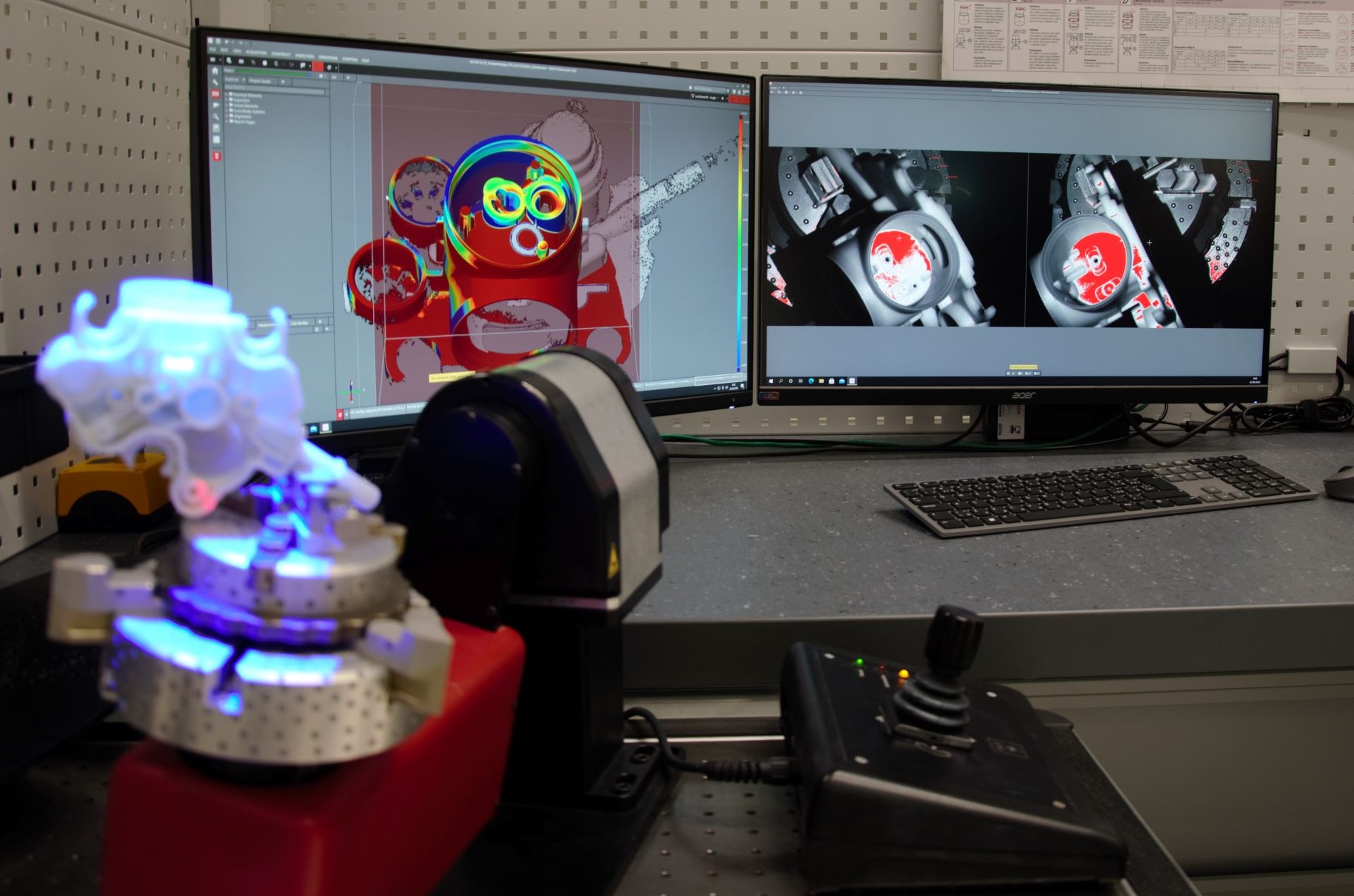
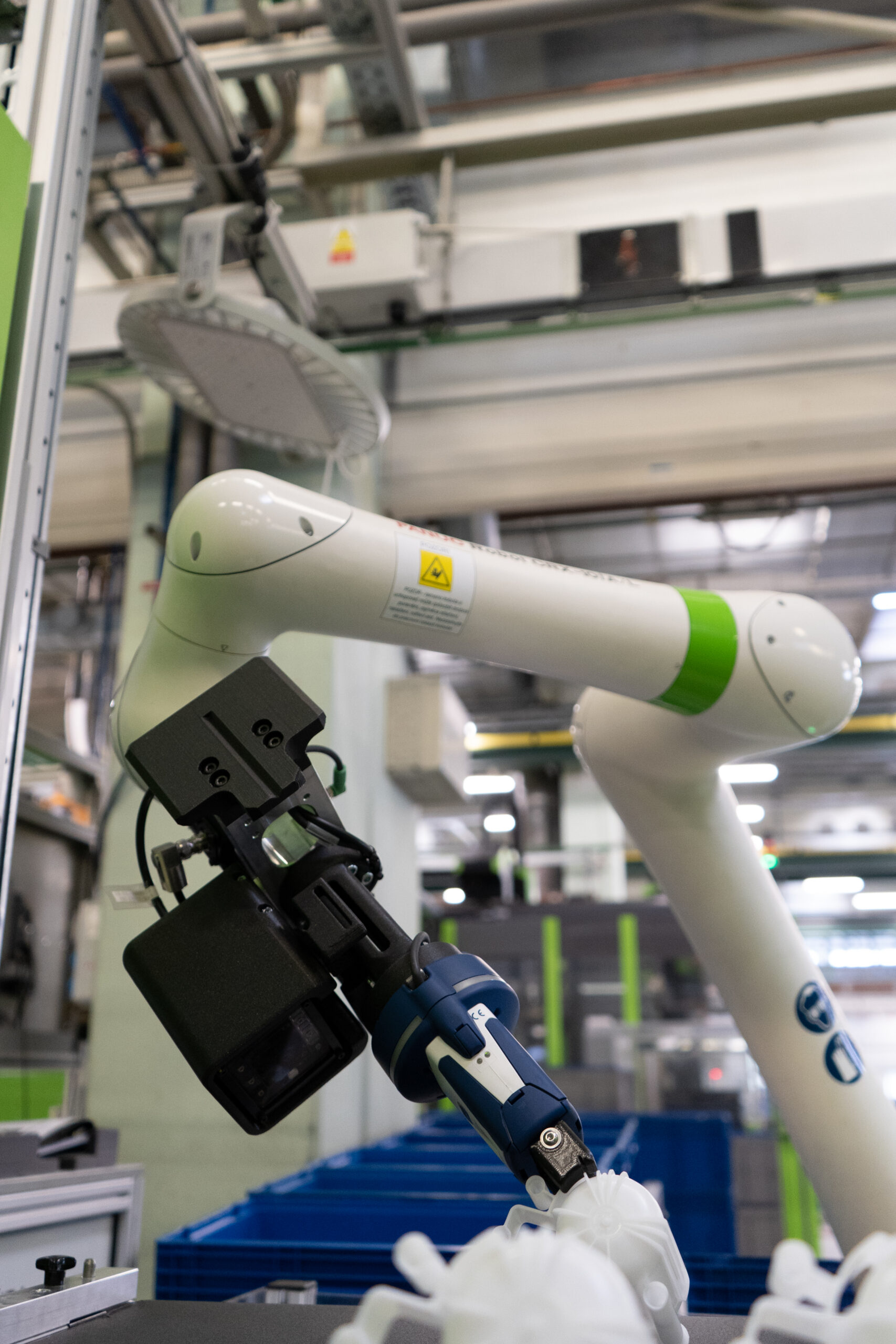
The integration with robotics is also interesting. Today, for example, I saw a solution that I really liked. You have a more complex component that you need to inspect from different angles. You can position 8 or 10 cameras around it. Or you can use a cobot fitted with a relatively inexpensive camera, which moves around the part and inspects it step by step. This is followed by data analysis. This particular solution is not yet in series production, but it points to a future direction of development. And with agent-based AI, we can go even further. The system will no longer simply recognise whether a part is OK or not. The result of the inspection can trigger the next action straight away.
Tanja Rückert:
It depends on the specific process and use case. For safety-critical processes, you must always ensure that a human retains control or that there are clearly defined points at which they intervene in the process and make decisions. However, there are internal processes – such as order creation or certain logistics activities – where we can move towards a much higher degree of autonomy.
Of course, this doesn’t mean we’re at that level everywhere. We aren’t. But it does show how far we can go with certain processes. An AI agent has its own task. You set the boundaries for it, and it works towards the goal. In doing so, it doesn’t think within the confines of individual departments. And it’s true that in some internal processes, it is actually us humans who are slowing the whole process down. As soon as a human gets involved, they need data in a specific format; we have working hours and other constraints.
That is why I believe that for standardised internal processes which are not security-critical and do not represent a competitive advantage for the company, we should automate as much as possible. For others, however, we need secure decision-making points where humans are involved. It is precisely these human interventions that may, in the future, become one of the factors by which companies distinguish themselves. Every company will have to determine where its competitive advantage lies and where decision-making should remain in human hands.
Tanja Rückert:
It depends very much on whether you have your underlying systems and data properly in place. If the individual components are ready and the data is in the correct format, you can move forward very quickly. On a large scale, of course, it will take some time. Just yesterday we had our internal AI Day and it was very interesting to see how far we’ve progressed with automation once again.
Tanja Rückert:
I was very impressed by what I saw here at the plant today. A good example is the spare parts solution, which demonstrates how AI can be gradually integrated into individual processes. First, you visualise the data, create an overview and make it accessible to people via dashboards. Then you add a chatbot that you can ask about this data. The next step is an agent that can already automatically perform certain tasks, for example in SAP. This part hasn’t been implemented yet, but the direction is clear.
I also saw the Manufacturing Image Analyser (MIA) here, as well as other applications of analytics in manufacturing and maintenance. Sometimes people feel that things like this only happen in the United States or in China. In reality, they’re happening here too. In my view, what’s very important is that the people here really understand manufacturing. They’re able to optimise specific processes and gradually apply their experience to working with AI as well. It’s precisely this combination of technology and manufacturing expertise that I believe is crucial.
ROBOTICS AND HUMANOIDS
Tanja Rückert:
When we look at robotics, one of the main limitations today is training data. We often hear that we have a huge amount of data in production plants or on the internet. But that isn’t necessarily the data a robot needs. For example, a robot needs to know exactly how you pick up a box and move it from one place to another. We need to observe how a human carries out a specific task.
In this respect, we’re in a very good position. We collaborate with laboratories, we have a manufacturing environment, visual data and other experience. But data isn’t the only issue. In my view, it’s still unclear in robotics what form of robot will ultimately prevail.
Tanja Rückert:
I don’t think we’ll become a manufacturer of humanoid robots. There are certain hardware components where we’d probably never be price-competitive. However, we are already a supplier of components. We have sensors, actuators and electric motors. We are a data provider and also a partner for industrialisation.
For example, we’re working with two robotics firms that currently develop their solutions largely by hand in their own laboratories. If they want to move towards industrial deployment, they need space in a real factory and manufacturing know-how. That is precisely why they are seeking to collaborate with us.
Tanja Rückert:
I’m convinced that humanoids will bring about change. Are we there yet? No. We’re testing humanoid robots in various factories. But when we ask what we actually need from them in production, they must be able to move in several directions much like a human, they must be able to grasp objects and, above all, achieve the required production cycle time. We don’t want a robot to slow down the production process.
When I look today at a mobile platform with two cobotic arms, we’ve already come quite a long way. With some of the humanoid systems we’re working with and training, however, we’re not yet achieving the necessary cycle times. So I do believe in humanoids. However, I’m not convinced that the ultimate solution has to be a robot that completely replicates the human body. Today’s factories are built for people. We therefore need a robot that comes as close as possible to human capabilities, but at the same time is more efficient and, hopefully, more cost-effective.
Steffen Hoffmann:
It is precisely in manufacturing that combining the best of both worlds can make sense. For example, you could have the lower part of the robot on wheels and the upper part resembling a human. In an industrial setting, you do not necessarily need to replicate the entire human body.
Tanja Rückert:
I’d look at it a bit differently. The big challenge is the ability to truly perceive the surrounding environment. It’s not easy for a robot to recognise: ‘there’s a wall here, there’s a machine standing there’. Gradually, it will need senses similar to those of a human. It must be able to see, touch and hear.
For me, the hand and the act of grasping itself remain a major unresolved issue. There are studies investigating how many tasks a robot can perform with two, three or five fingers. Sensors play a major role in this. We have pressure sensors that are so sensitive they can even detect the touch of an insect’s leg – a force that a human would hardly feel at all.
Some robotics firms currently use two sensors in a single finger, others four, and in one solution we’ve even seen eight. Imagine an ordinary glass that you’re taking out of the dishwasher. The robot must grip it firmly enough, but at the same time mustn’t squeeze it too hard. If it starts to slip, the sensors detect a change in pressure and the robot can adjust its grip. It is precisely such seemingly simple tasks that demonstrate just how challenging it is to replicate the capabilities of the human hand in robotics.
Another challenge is training data. When you see some impressive robot demonstrations today, it is worth taking a closer look. Some systems are still remotely controlled or have their movements rigidly programmed. In well-known demonstrations of robots handling swords, for example, you may notice that the sword is firmly attached to the robot’s hand. The robot is not actually able to grip it. This illustrates very clearly just how great a technological challenge can lie behind a seemingly simple movement.
HYDROGEN AND ENERGY
Tanja Rückert:
In my view, we cannot look at just one aspect of hydrogen. Unless we address the entire hydrogen value chain, it will be very difficult to make further progress. You start with clean water, followed by electrolysis and hydrogen production, then its transport and refuelling, and finally its actual use, for example in lorries, ships or, more generally, in heavy long-distance transport.
If we focus on just one area, we’ll miss the point. We also need government support, financial backing and a certain impetus to help get the whole system moving. Without that, hydrogen won’t take off on a larger scale. I am convinced that we cannot achieve the climate and energy transition without hydrogen.
Steffen Hoffmann:
If we look at the issue from the perspective of energy supply, there are certain limits to green electricity generation in our countries. We do not get enough sunshine here, and wind conditions are not as favourable as in other parts of the world. We must therefore also take into account countries where, for example, electricity can be generated under significantly more favourable conditions thanks to photovoltaics. In the Middle East, we can achieve a cost of approximately 1 to 2 cents per kilowatt-hour.
This then raises the question of how to get this green energy to Europe. One option is to produce hydrogen in these countries via electrolysis and then process it, for example, into ammonia or hydrogen-based synthetic fuels, which can be transported to where the energy is needed.
We therefore regard hydrogen as essential for both energy storage and transport. The question is how to set the whole process in motion. And this is precisely where governments must step in, for example by establishing energy partnerships with countries in the Middle East. This need not involve only substantial subsidies. Above all, we need a clear political signal that this direction is necessary.
Tanja Rückert:
Essentially all its stages. It starts with water treatment.
Steffen Hoffmann:
This is followed by electrolysis and electrolyser stacks – in other words, the actual production of hydrogen. For its transport, we have cryogenic pumps and valves, and on the application side, for example, solutions for heating, hydrogen engines or various types of fuel cells. Bosch therefore has products across the entire hydrogen value chain. However, we’re not promoting hydrogen simply because we have products for it. We’re promoting it because we genuinely believe it’s necessary for the ongoing energy transition.
Tanja Rückert:
Moreover, in many countries we come up against the same problem. What should come first? Hydrogen filling stations, or vehicles? If you have nowhere to refuel, you won’t operate a hydrogen-powered lorry. We therefore need a certain impetus to help break this vicious circle.
Steffen Hoffmann:
The water treatment technology developed here is also capable of processing seawater. This is very important, for example, in hydrogen production in Saudi Arabia or other arid regions of the world. There, you cannot rely on fresh water sources and you need a robust solution that can operate even under these conditions.
Milan Šlachta:
This solution was not developed for the Czech market. It was intended for use in other parts of Europe, the Middle East or Africa. It would be too costly to use in the Czech Republic.
EUROPE AND INDUSTRIAL AI
Tanja Rückert:
I believe our opportunity lies in industrial AI and physical AI. One is more focused on engineering and manufacturing, whilst the other is geared towards robotics and the machines themselves. Both require data combined with in-depth knowledge of the specific sector. Europe has a unique opportunity to combine these two elements and, as a result, to gradually make progress in robotics as well. We should not squander this opportunity by moving too slowly or by unduly restricting development through regulation.
For the further development of robotics, we need real data from manufacturing plants – genuine industrial data. Without it, we will not make progress. Synthetic data alone is not enough; otherwise, we would already be further ahead in robotics today. Europe is very well placed in this area. If I were to mention another country, I see a similar opportunity in Japan. Some countries that are currently leaders in consumer technology do not have this industrial advantage.
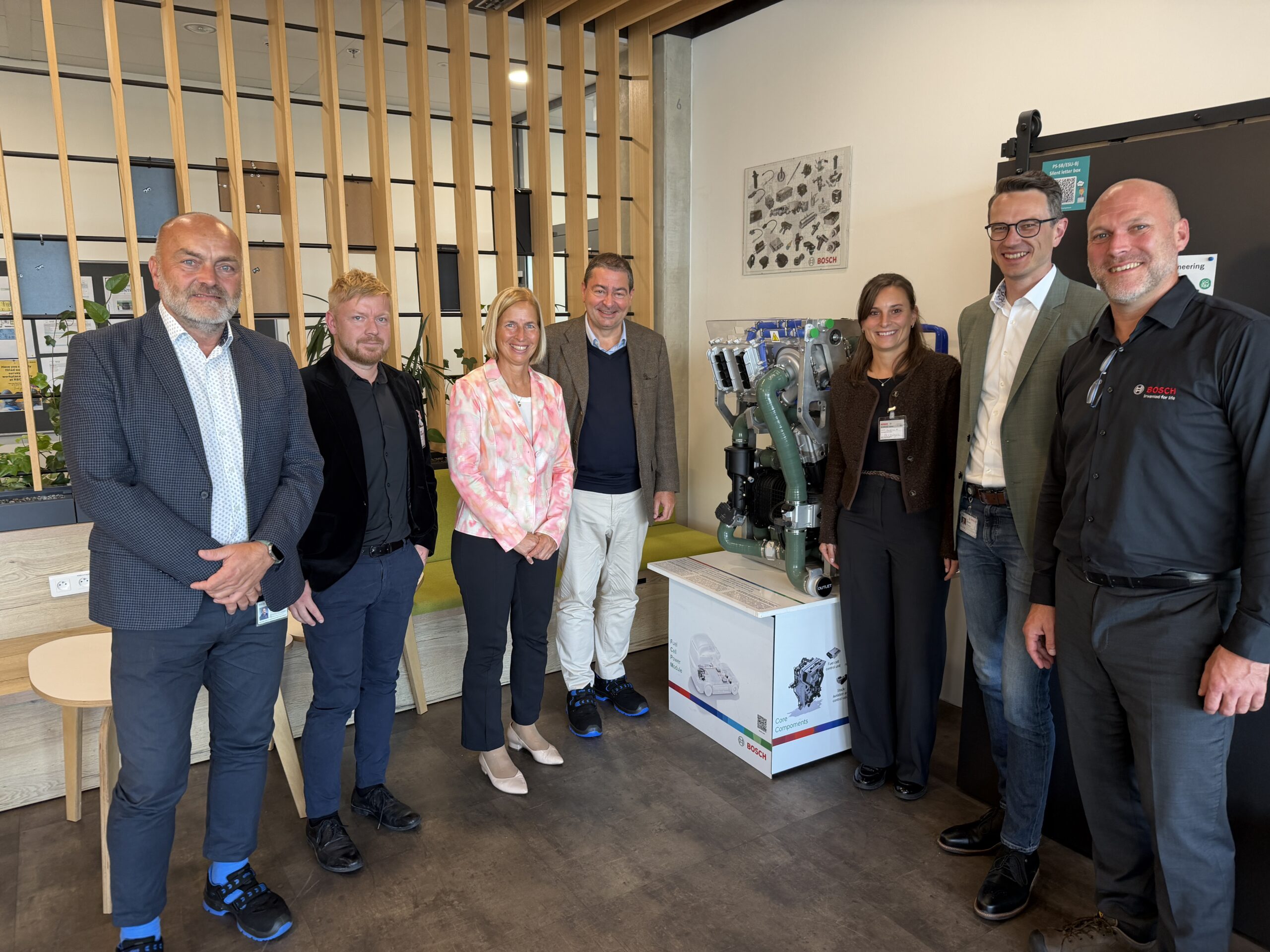
Milan Šlachta, Lukáš Smelík (All About Industry), Tanja Rückert, Steffen Hoffmann, Markéta Vondálová (World of Industry), Sebastian Bannert, Technical Director of the České Budějovice plant, and René Schimon, Director of Development.